Categories
Church Ministry

Why I don’t come to everything.

694470_36995341Sometimes people wonder why I don’t go to a particular event and I hope this might give you some kind of answer. Of course, every persons event is important to them and they will believe that I should be where they want me to be. The problem with ministry is that there are loads of events that I could attend. Each church in the section I look after has events, then there are events in the other Circuit churches, then there are the district events and events in neighbouring circuits to say nothing of ecumenical events and events in the community.

Here is a list of my reasons why I may not be at your event – they are not necessarily in order of priotity but they all combine.

1. Family – I have always believed that my own family must take precedence over church events. When I have a working wife and children at school I don’t get opportunity to see much of them during the week. Weekday evenings are also often taken up with church meetings (sometimes business meetings, sometimes to see people about weddings and baptisms, sometimes to see people about personal things, sometimes to see community leaders, etc). As I often work all day on a Sunday I have one day in the week (Saturday) where my family can have some of my time. I firmly believe that it is the job of a minister of God to live out what he preaches each week and if I am going to preach about the importance of family (and I hope churches would want me to) then I sometimes have to sacrifice being at a church event for the sake of my family.

2. My health – ministers are very susceptible to breakdown and ill health. In fact this has happened to past ministers in the section of the circuit I am working in. There is quite simply too much to do. I once worked as a Stress Management Trainer (I had to train and get qualified to do this). I am very aware of the effects of long term stress and the perils of ignoring it. Doctors today believe that as much as 80% of serious illness has a direct link with stress (stress does not cause illness but it can trigger it and certainly makes it much worse).  Stress is also the leading cause of long term sick leave (back pain being the first for short term). On top of this I have been reminded just recently of what can happen with three of my own friends having heart attacks (to say nothing of the heart attacks I have heard about in the news lately). I can say with some confidence that they, my friends attacks, are all linked to stress. I am determined that this will not happen to me but to avoid it I must take a pro-active approach to looking after myself. This means taking rest and relaxation when it is needed.

3. Higher priorities – maybe the two above qualify for this anyway but there are also priorities in my work. Although I would, of course, love to spend more time with all of you I have to prioritise my time as best as I can. You may have reasons why you think I should make your event a priority but I have to decide based on what I believe God has called me into ministry for. God chose me for a reason, and whilst I struggle to understand what that reason might be, I do know that he did it because he wanted to use my gifts and talents for the benefit of the church. This means that it is my duty to prioritise my time based on what I believe God has called me to do. Your idea for what I should be doing may be different but I have to be true to my calling. I don’t honestly believe that God called me to fund raise (some ministers he did) or to spend my time socialising (enjoyable though this is and some ministers do seem called to this). This does not mean I will never socialise (I think this can be important for ministry) or help with fund-raising (this is part of every Christian’s duty as part of our care for the world and our communities).  I am really sorry if this dissapoints anyone but you would want me to be honest and open about this I’m sure.

4. Other ministries – not all I do is about your church. I believe it is part of my role to engage with the communities in which I am based. This will mean doing things that have no direct link to the churches I serve. It takes a great deal of time and energy to do this (I often have to build a relationship from nothing and sometimes with people who are very suspicious of church). However, if we are going to help create the kind of world I believe God wants then the church must leave its buildings and engage with the community. At the moment I am engaging with young people through the Duke of Edinburgh Award scheme. This has proved to be very valuable work and I have had more meaningful conversations with non-church people doing this than through anything else I have tried. You also know that I do some of my work on the Web. Engaging with people who have been hurt by the church and with people who have an interest in spiritual things but doubt the church can help. This is direct work ‘on the frontline’ if you like, it is very demanding and challenging and takes up time.

5. Self – sorry to be a little selfish for my last point. I am still a person. I get tired, I get grumpy, I need prayer, I need rest and relaxation, my life is supposed to be enjoyable as well as yours.

There are many other things I could say – but I don’t want to take up too much of your time. This is also not a moan – honestly. I hope you will understand that I say all this because it is important you understand why I was not at your event. I believe that the Methodist people are very supportive of their ministers and I know that you are to me. Just occasionally, though, I sense some dissapointment about things that I don’t come to, you can help me by understanding and not showing that dissapointment. I am a sensitive soul (you have to be in ministry) and the occasional dig and innocent comment can hurt and undermine the work I try to do.

Thanks for your support in this matter.

Categories
Church MSM

why don’t I wear a dress?

churchIt used to be said that church was about the only place you could go on a Sunday morning to see a man in a dress.

The dress in question would be a cassock of course and I don’t mean this to be an insult to anyone of an alternative lifestyle (even if I personally disagree with such a life choice – this doesn’t mean I judge you if you make such a choice, I firmly believe that people are free to make life choices of their own but that does not mean that I have to agree with it – real love is loving someone even when they make life choices that are in disagreement with your own life philosophy – maybe we can explore this another time).  But I sometimes get asked why I don’t wear a cassock.

The first thing to say is that actually I do wear a cassock but not very often. I have nothing against cassocks – I used to wear one every Sunday. But I am aware just how far going to church is away from many people’s every day experience. It can be a real challenge even to get through a church door. So when inside I also think I must do what I can to help people relax and feel at home. I can play my part by looking more ordinary. We do still meet people in suits and so that is my chosen outfit for leading worship (in really hot weather I might forgoe the jacket).

At our MSM course we thought about how strange it is for people to go in to a church. Having returned to church and I testify to just terrifying it is to just get through the door – and I know what to expect on the other side!

Let’s do everything we can to make people feel welcome.

Categories
Church MSM

Gospel and Culture MSM

339176_1500The last session we were exploring the realtionship between gospel and culture. We tried to understand what culture is (not and easy thing to do) and then had to relate what we discovered to the church. It seems that it is quite difficult to reach across cultures (though not impossible) and this can raise all kinds of issues.

Church, it seems, has its own culture and too often we have sought to impose our culture on others when what they really needed (wanted) was the gospel. A story was told of a missionary who decided to tell the story of Jesus to people he had been working with for some time only to get the reply that they already knew the story but if this story was so important to the missionary why was he telling them now, after such a long time.

The challenge for us is to tell the story of Jesus without the cultural things that may get in the way.

I find this a constant problem in my own life because my background is not middle classed (yes, I know we don’t like to talk about classes but then not talking about class is a very middle class thing to do) and yet I find myself in a middle class culture. I don’t mind – there are some parts I enjoy – but sometimes it is a struggle for me. I won’t give more details because it might upset some folk. But the point is that when we insist people adopt our culture we are restricting the way we can present the gospel.

So we need to understand that whoever we are we are part of a culture because only when we recognise our culture can we move outside of it to reach others. We must also face the fact that we will actually be far more effective at telling our stories when we tell them to people who are like we are.

Of course, this has been the benefit of the web. We have an environment where people can find others like themselves more easily, but that is a whole other area.

Categories
Church MSM

You’ve got to have good vision

msm-logoOn Saturday at the MSM training day we explored the importance of having a vision and how to get one.

Vision has become a popular word in business circles and as a result of many poorly managed visions (so vague that they mean nothing or too complex so that no one can achieve them) anyone in business (or public service) has become very cynical. However, it is undeniably true that without a clear idea of what we want to achieve we tend to achieve nothing.

The process of understanding a vision for a church can be complex. It involves listening to God first. What does God want us to do in this place? Then it is important to listen to the community that surrounds the church. What are its needs? Where are the opportunities? Then we need to listen to the church. What gifts do we have? Who is available to support a vision?

We explored a process where we can take an audit of our area and this should help us to discover its needs and opportunities.

In the end I think it is true that God already has a vision for what any church can do in its location; we just have to discover it.

Categories
Church MSM

MSM Course

Started the MSM course yesterday in Taunton. It is a long course but then anything that is designed to change ways of thinking must be done over a long period of time. One of things I particulalry like about it is that it isn’t about church. There is always a tendency to think about how we preserve our church and then we miss the question of what does God want to do with his church? There are amny questions to ponder over on this course.

Questions about the meaning and purpose of church. Questions about what we should do together as a church. Questions about what will the church do in the future? But all of these must be subject to the one overriding question of what does God want.

What does God want from his church?

Categories
Church

We need more passion

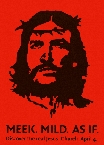
jesus-revolutionary-1999-easter-poster-ukOne of the problems the Methodist church has is lack of passion. I think that maybe because we try so hard to get along with each other that we avoid any display of passion in case it upsets someone else. A passionate preacher usually irritates at least one person in a congregation; a passionate person who speaks up in a meeting can cause others to squirm. Without passion, though, we are stuck where we are.

The Bible is full of passion. The old testament prophets seem to ‘lose it’ on a regular basis but we don’t like it when there is passion  – being British we find it too emotional or too upsetting.

Yet, I get upset that 94% of the population doesn’t want to engage with the church. If the church is the body of Christ why would anyone not want to be involved? Maybe the 94% are actually the church and its the 6% of us who go on a Sunday that are deluded?

Of course the greatest passion found in the Bible is that of Jesus, we even call the week leading up to Easter Passion week. Yet, instead of displaying any passion in our churches we are likely to gather in quiet, discreet groups and whisper theological words to each other and tutt at the way those with passion os often twist the gospel. I wonder if the religious leaders who condemned Jesus did the same thing leading up to passover.

Where is the passion in our church? Should it only be for the weird and the wrong headed to express their passion?

Categories
Church Thoughts

He never said a bad word about anyone

I’ve sometimes heard people say, about someone who has recently died, that ‘ he never said a bad word about anyone.’ I’ve always thought that this was a very good trait to have and someone who was like this is no doubt very saintly. But something I read the other day made me rethink this. This book pointed out that whilst it sounds like this is a quality that we might believe makes someone very close to the way Jesus was; it isn’t.

Jesus had an awful lot to say about some people and he didn’t mince his words either. Maybe we might say that this is because Jesus alone had the right to say such things but I think that misses the point.

Jesus had a lot of good things to say when people were doing good things (even when it was a bad person doing a good thing) – in fact he pointed to the good when often others chose to ignore it in favour of making people, even good people, feel bad about themselves. Sadly the trait of making even good people feel bad about themselves is something that the church has fallen in to from time to time.

But when Jesus saw an injustice, or when he met religious bullies, or people who should know better; he had an awful lot to say to them that was pretty bad.

So maybe we should not aspire to be the person who never said a bad word about anyone but instead aspire to be someone who speaks out against injustice, stands up to bullies (especially the religious kind), and who praises the good he finds in people even when it was hard to find. In fact, just like Jesus.

Categories
Church

Simply

In our Methodist Area there is a new adventure in church going on. Steve Jones is starting the process of setting up a connection of seekers in our area.

You can follow his progress at his blog  www.steve-jones.org

If you want to know more about Simply then Steve would be very happy to talk with you.

Categories
Church

60% of people would visit church if asked

Flicking through the T.V. channels the other day I ended up watching a service from the Abundant Life church in Bradford. I’m never quite sure if I agree with everything said – but then I feel that way about my own church and only a fool would deny that they are being very successful in their work.

Anyway Paul Scanlon mentioned a survey they had taken on the streets of Bradford. The results were very challenging. They discovered (this was just a simple questioning, not a full blown survey or anything) that 90% of people said they had never been invited to church and 60% said that they would go it they were asked.

Now, even if the results are not entirely accurate they still point to two interesting things.

The vast majority of people in Britain have never been invited to church.

I think a lot of people don’t invite friends because they are a little embarrassed of what their friends will come to. I went to a meeting the other day where the question was asked about whether it matters if the music isn’t done very well in a church. Of course the answer most gave was no. This is right on the basis that God just wants us to offer what we can, it doesn’t matter to God if you are good at making music or not the important thing is that you offer it in the right way. However, people who don’t understand this (non-churched visitors perhaps) will notice if the music is badly done. We church goers understand this and I think this puts us off asking people (you can extend this to bad preachers, bad drama, bad prayers, bad worship leading, etc).

The majority of people would go to church if they were asked by a Christian friend

The survey had no connection with the ALM Bradford and so the question they were answering was an invitation to the image of church that most people have (boring, dusty, irrelevant, etc). This doesn’t answer the question of whether they would come again after being asked but simply that many would come if they were invited.

Lots to think about

There is lots to think about here but I see this as a challenge to the church. We need to take inviting visitors seriously and although it may make us feel uncomfortable we ought to start doing it.