Categories
Thoughts

Is religion evil?

799642_18679946I have often heard the accusation that religion is evil. The evidence, it is claimed, is that many wars have been fought in the name of religion and many people have been mentally and physically abused in the name of religion. There is then usually a comment about the restrictive laws that have subjected women, people of other races and the sexually orientated minorities to terrible suffering in the name of religion.

Of course, many of these accusations do have foundations because many religious people have been the source of much suffering (to deny this would be a crime in itself). I would like at this point to add my voice, again, to the many others who have said sorry for the suffering that has been caused in the name of religion.

When the religious counter this argument by pointing out that the same suffering (if not more) has been caused by atheist regimes the counter-claim is made that these were of course regimes that were  – to all intents and purposes – religions, in that they encouraged the worship of individuals.

However, such an argument  – in my opinion – misses the point completely and here is why. An organisation and the philosophy that drives it are two distinct things and should not be confused.

The truth is that it is not the religion that causes the problem but it is the organisation that is set up in the name of that religion that is to blame. Sadly, when power, influence or money is at stake people look for justifications to allow them to take what belongs to others (be it oil, land, gold, whatever). They can find excuses in the corruption of any philosophy to justify their actions. Sometimes organisations get so big and the people who run them so powerful that they get corrupted. This is as true for any atheist organisation as it is for the Church or government or whatever other organisation you might mention. We are currently seeing this played out with FIFA where so much power and money is concerned that people have manipulated rules – or so it seems – to allow them to have a greater share of the power and money than perhaps they should have done. It seems obvious to me that the problem is with the organisation and not necessarily with the philosophy behind it. If you want to learn about organisations that cause suffering you have to include the old communist states of the world in your reckoning – atheist organisations of course who did everything in their power to stamp out religion – including causing great suffering to the religious.

So why do religions get more blame than other organisations? Is it because we are all aware that they should know better? Is it because we know that the religions behind them have such a high moral code at their heart that they should know better than to cause such suffering and problems? I think this is certainly true of the Christian church  – though I cannot speak for other religions. Christians should know better but sometimes they get it wrong and the organisation becomes corrupted (even if the people at the top don’t understand that what they are doing is wrong – but that is a big subject for another day perhaps). And that is why, from time to time, the church issues an apology – what other organisations do you know that do that? Has the scientific world (for instance) apologised for the part it played in the extermination of thousands of Jews during the second world war? If it has I’ve never heard of it.

Here are some links to church apologies in case you doubt this: From JP2 from Methodists

Of course, the organisation that breaks its own codes of morality should be held to account for it but that does not make the codes of morality evil. I am quite happy to say that atheists are not evil people – misguided yes but not evil. I don’t blame atheism for the suffering caused in its name  – though I do have questions about the lack of moral absolutes that can so easily lead to such suffering. So, you can’t blame the Christian faith for the bad things the church has done in its past – to confuse the two is either extremely nieve or downright ignorant.

The best you can do is to attack each religion on its moral code – not the organisations associated with it (hence, to condemn the Muslim faith on the grounds of terrorism alone is nonsense). To make any such argument you would have to attack the moral codes of each religion and at least decide on each religion individually (this would require a detailed examination of what each religion ACTUALLY says and not your own interpretation of some obscure texts or literal out of context quoting or quoting some extreme minority position, as most atheists seem to do). I am happy to say – without spelling it out in detail here – that I believe Christianity can stand up very well to such an attack.

No, religion is not evil.

P.S. Of course, without religion you couldn’t even ask the question because without God there are no moral absolutes and without moral absolutes there is no such thing as good or evil. If you are an atheist who wants to make the claim that religion is evil then you are defeating your own argument – sorry.
Categories
Thoughts

Christian or not?

hp photosmart 720
hp photosmart 720

There seems to be a backlash going on at the moment regarding people’s affiliation with faith groups. People are angry at terrorists and, mistakenly, believe that it is a fault with belonging to a faith. Hence the dramatic rise in those who claim no affiliation to any religious group. I think there is also a belief that there is something hypocritical about saying you belong to a religion and yet never have anything to do with its institutions – maybe this is people being more honest but in my view it is more people being confused over what it means to be a Christian (or whatever).

Of course the church has colluded in this in many ways. It has not been open and honest and (like all institutions) has suffered from those who have used the organisation for their own selfish ends – people have got fed up with it (I note that the church has apologised for this behaviour but no one seems to notice).  The church itself has suffered from a crisis of faith sometimes preferring doubt to faith and being confused by various modern approaches to thinking about faith that have left us all wondering what it is we actually do believe. The church has avoided confrontation with atheists (presumably in the hopes that if we stick our head in the sand it will all just go away) – handing the atheist the intellectual high ground where they have set about disturbing the minds of countless University students who have been persuaded (wrongly) that atheism is the only intellectual option. This has been passed on to the whole education system which is now so confused about what Christians believe that it prefers a simplistic ‘all religions say the same thing’ approach – they don’t. How can people say they are Christian (or not) when they don’t have a clue about what being a Christian is? I notice that this leads the ignorant to call for less Christianity in our institutions – we don’t need less we obviously need more.

The situation just seems to be getting worse. I do see signs of hope and my understanding of history is such that I can take assurance from bad periods in the history of our nation where things became pretty Godless previously.

I guess what concerns me most is that the majority of the country seems to be quite happy to go along with being Godless. I am worried about the soul of this nation and although others do feel the same how can we convince the media – who seem to have a tight grip on what we as a nation believe?

Categories
Thoughts

Free Speech – do we have it or not?

867034_22979318We are always being encouraged to think that free speech is important and it is all about being free to say what you want. I do believe it is important but I don’t think it is about being free to say what you want. In fact we have laws to stop people saying what they want when it is going to incite hatred or violence against another. We rightly  – in my opinion – stop people from attacking people verbally just because they have differing coloured skins , etc.

Free speech should not be about saying anything but should be about rational and thoughtful discussion of any issue.

We are also given the impression that we should restrict speech if someone is going to be upset by what is said. This is nonsense, of course. We cannot decide to ignore issues just because someone might be upset in the discussion. If we are going to have real freedom of speech and try, together, to discover what truth really is then we must be prepared to allow people to say things that might be personally upsetting. Of course, I’m not suggesting in a Politician/School playground sense but in a clear and reasonable way. Arguments can be put in such a way that they are designed to cause a reaction in the hopes of winning a point by causing the challenger to feel uncomfortable – or even angry. That way of arguing does not get us any closer to the truth.

I firmly believe that what we need is the ability to have a talk about anything with an approach that says anything can be said as long as it is logical (backed up by evidence if necessary) and said in a way that is not a personal attack or said in a offensive way. I think there is a difference between talking about something that someone might strongly disagree with (and hence find upsetting) and talking in an offensive manner (using words or phrases designed to get an emotional reaction). We have to learn to use language better and find a way of not getting all hot under the collar when someone disagrees with us.

One of the problems I find as a Christian is that few people are actually willing to have a sensible debate. Nearly all discussions of faith, outside faith communities, degenerate into name calling with points trying to be scored by citing the badness of those who have claimed to be Christians (or whatever). Yes it is true that there have been many misguided people who have believed they were doing something in the name of Christ (this could also apply to Mohammed by the way) when in fact what they ended up doing was anything but in the name of Christ.

It would help everyone if we could get beyond the pointless name calling and start talking in a sensible way.

I sometimes hear/read atheists, for instance, saying that 9/11 changed everything and so now the gloves are off and we are free to start name calling. I’m afraid 9/11 changed nothing in regards to what the truth is and that name calling is still (and always has been) a pathetic attempt by those with weak arguments to win by making the opposition embarrassed. Free speech is not freedom to make offensive jokes or produce offensive cartoons – this is an abuse of an important value (and sadly for many reason seems to leave when laughter begins).

I pray that one day the world will wake up and start taking truth seriously and seek after it in a good way  – that for me is what free speech is about.

Categories
Thoughts

Celebrate or Commemorate War?

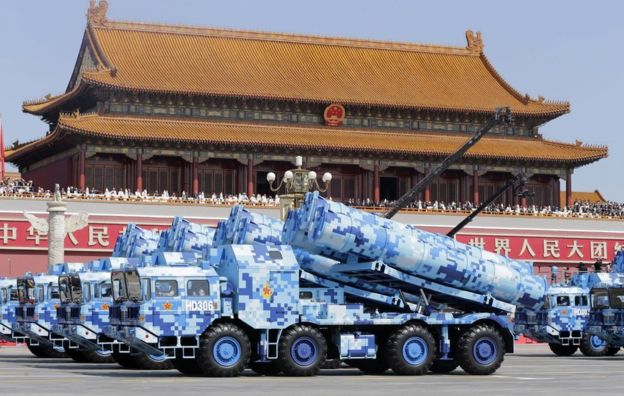
_85337359_028831871-1The Chinese just put on a big show to remember the end of WW2 and they chose to show their own military might for the occasion (story on BBC here). I suppose maybe they felt that it was a military occasion and so required the military to march in force. I think differently. I do accept that the military have a part to play – they will wish to remember the cost as much as anyone and I also accept that the military are all still people and part of society (maybe this goes without saying). However, world history has shown that countries celebrating military might does not often end with good feelings and surely any war should be remembered but not celebrated.

You know in medieval times when people went to war they had to pay a religious penalty to help offset some of the wrong that was done. This itself went wrong with the church trying to profit from it financially (that is about greedy people not greedy religion by the way) but the idea was a sound one. Going to war is always going to be wrong because in war people kill each other. Sadly in some circumstances we don’t seem to have any other option but that failure doesn’t make war right – ever. A knight would go to the Holy Land on Pilgrimage for killing others or a King might build an Abbey and pay the wages of some clergy to pray for forgiveness. Surely this is a better response than marching your military might around as if going to war was a good thing.

We remember the ends of wars to be thankful for those who stepped forward to pay the price and to be proud of them for doing so but also to remind us that if we are not careful these things can happen again – as indeed they do. Let’s remember but never celebrate.

What are your views on this?

Categories
Thoughts

Catching up

694470_36995341Blimey! I can’t believe it has been so long since my last blog entry, sorry. Life has been very busy with the usual church stuff and the DofE season is in full swing.

I’ve been put with Haygrove School in Bridgwater and Heathfield School in Taunton. I am always impressed with the young people I meet on these events. Of course, there is the occasional silly one but most are just very nice people – I wish every newspaper editor in the country could see what I see when I’m out on the hills.

It seems to me that time and energy invested in our young people is time and energy well spent.

Categories
Thoughts

Save our National Parks

7596032I’ve always been proud of the way Britain has preserved its national parks in the past. On an Island with a high population density we have protected areas that give us the chance to experience some wilderness. However, our recent obsession with austerity (coupled with a near pathological fear of tax)  is having some large effects on many areas of British life.

Did you know, for instance, that the budget to our national parks has been drastically cut? So much so that some are now being forced to sell off some of the nationally owned land just to make ends meet. It is claimed that this will not effect access to such land but given the slippery slopes that we seem to be good at stepping out on these days I can’t help but wonder if the assurances can be wholeheartedly believed.

I think we will all want to get such cuts into a perspective of other cuts made to our social services (not least cuts to youth work provision) but given that our National Parks generate far more income for local economies and the nation than they ever cost to run (see research on this here) and that research now backs up what Christians have always said – wilderness is good for the soul – forcing land sales by cutting meager budgets is a false long term economy.

If you would like to support the campaign to support our national parks you can sign a petition at

http://speakout.38degrees.org.uk/campaigns/42

Is this the end of our National Parks?

Categories
Thoughts

Technology in the Great Outdoors

16576492I have a love/hate relationship with technology. At times I love all that button pressing and flashing lights stuff but at other times I hate it (especially when it won’t do what I want it to). So it’s always a relief to get out into a wilderness and leave it all behind. But, I don’t leave it all behind. I usually have my mobile phone (important for emergencies) and when I am not familiar with an area I usually use a SatNav/GPS thingy, does a compass qualify as technology? Then again instead of button pressing I have catch releasing as I open my state of the art backpack and put on my technical wet weather gear.

But surely it isn’t actually the technology that is the problem. My phone is just a collection of various metals, minerals and plastics put together to perform a function; it is the function I am wanting to escape from. It isn’t the technology itself that is a distraction it is the way it is used, if I turn off my phone it is as though I didn’t have it with me. The problem with modern life is that somehow we have become so enamoured with our technology that we sometimes find it really hard just to turn it off.

So I’m not going to get hungup on what I carry with me but instead focus on not letting it distract me. Instead I’m going to remember to enjoy what God has made rather than letting what people have made be my focus.

Categories
Thoughts

I believe in soap, the Lather Almighty

19096762This has appeared in many church magazines and whilst I’m not in the habit of passing on this kind of thing it took me so long to find a copy of it the other day I thought I’d stick it in my blog and then I’d always have a copy somewhere.

It is mildly amusing and very corny (maybe even a little sad) but I think it does make the point that it does matter who you believe in – not all beliefs are equal.

I believe in soap, the Lather Almighty, and in shining white, his only sud.
Conceived of research chemists; Born of modern technology;
Offered under plenitudinous trade names;
advertised; demonstrated; and bartered.
I really, honestly and most sincerely,
believe in soap. Why, I attend the local soap factory every Sunday.
There, alongside others who believe in soap, we sing songs of praise
to the Almighty Sud.
Hymns such as, “O Camay Ye Faithful,” “Lux Devine All Suds Excelling” and “I Need Thee Every Shower”.
Visiting rinsers stand on their soap boxes, and exhort us to give of
our wealth, in order to establish launderettes in developing countries.
They teach us how we can remain clean, by deep study of the soap users manual.
I’m telling you this in order to convince you of my
sincerity. It’s a faith which I share with my wife,
and a faith which we seek to pass on to our children.
I do believe in soap, I will always believe in soap.
Mind you, there was a time when I did not believe. But I well
remember the day. An itinerant soap salesman called at our door.
Handing us a catalogue, he said “Put this in your Palm Olive.” To
which we replied, “Not on your Life Boy!” But he had opened his
case and pressed a tablet into our hands, and proceeded to warn us,
of the dire consequences of not believing in soap. He spoke of
diseases, germs, dirt and grime.
Soon thereafter, what I’d thought to be a load of old flannel,
completely changed my life. I knelt down there and then to spray.
But of course, it’s enough just to believe in soap,
isn’t it?
I mean, I don’t actually have to wash in the stuff, do I?

Categories
Thoughts

Are Christians hypocrites?

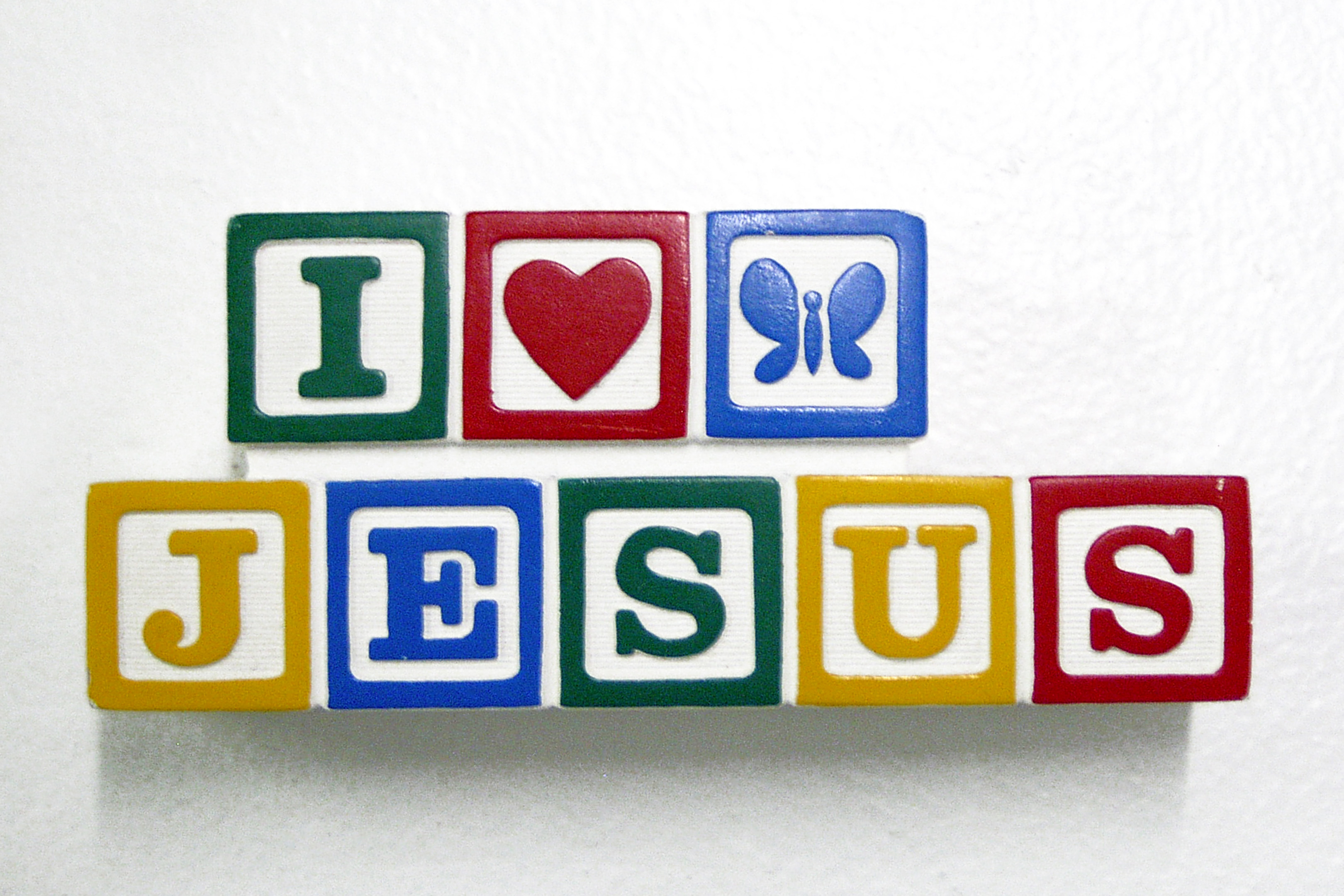
love jesusOne of the attacks that is often made on Christians is that they are all hypocrites – Christians like to say what is right and wrong and yet they don’t always do what they say we should.

There is a sense in which this is true, of course. Christians are not perfect followers of Jesus Christ, in truth they are no more perfect than anyone else, in that every last one of them (us) will make mistakes. I would want to claim, though, that those who try hard to be good disciples of Jesus probably do actually do a reasonable job; but even they will fail and sometimes the failure will be big.

The question though should not be are Christians hypocrites  – you might as well ask if they are people – but does Christianity work? This is the real question.

It may be possible to avoid hypocrisy by not saying anything. In fact this seems to be the way most people think we deal with it. Don’t admit that you fail but instead don’t say anything about what is right or wrong and in that way you avoid being a hypocrite. Is it just me or is this nonsense? What is the use in not seeking after truth and not trying to follow a good way if we do it just avoid being a hypocrite? What we would ever achieve if we only ever did the things we knew we could do?

Do we say that computers are useless and do not work because so many people who use one make mistakes? Of course not!

Because we all fail does not mean it is pointless to try. The real measure of the Christian faith should be does it work most of the time and the answer would need to be a resounding yes.

Categories
Thoughts

Be prepared

7593837In my youth the scouts (I went once but it wasn’t for me although I admire the organisation itself) always used to carry a bit of string in their pocket (maybe they still do) on the basis that it is always good to be prepared.

I’ve read recently about several call outs for the mountain rescue teams around the country where people were poorly prepared. This included a walker who got lost 400 meters from a car park because he failed to pack a torch; a person climbing a mountain in flip-flops; and two young men because they tried to climb a welsh mountain one wearing trainers and the other light walking boots (only suitable for low hills in summer months in my opinion). It is very hard to impress upon people (young and old) the need to carry the equipment necessary to be safe when out on the hills. In ideal circumstances very little is necessary for a nice walk but these ideal conditions are actually very rare and it is often surprising how quickly weather can change and what a difference a sprained ankle can make.

Of course, it is also difficult to get people to understand that they have a need for God when everything is going fine. It is only when disaster strikes that having a greater power to depend on can become very desirable. Life is very much like hiking in this regard it is best to be prepared, easy times should not be an excuse for neglecting God.